About

My photo
Hey there! I’m so glad you’re here. This blog is my little corner of the internet where I share everything I’m learning, unlearning, and growing through. From building better habits and improving mindset to leveling up in life step by step—this is all about becoming the best version of ourselves. I’m not here as an expert, but as a fellow traveler on the path of growth. Some days are full of motivation, some days it’s all about just showing up—and I believe there’s power in both. So whether you’re just starting your journey or looking for some fresh inspiration, I hope you’ll find something here that speaks to you. Let’s grow together. 🌟

Content

Showing posts with label NCERT- Governance. Show all posts

Marginalization - Confronting

Q.1: Write in your own words two or more sentences of what you understand by the word ‘marginalisation’.
Ans: The word ‘marginalisation’ simply means exclusion from the mainstream. Marginalisation of any community or a person can be because of many reasons like -
(a) Speaking a different language,
(b) Following different customs,
(c) Belonging to different religious group from the majority community etc.
Marginalisation is linked to experiencing disadvantage, prejudice, poverty and powerlessness. It is a complex phenomenon which results into a low social status, not having equal access to education and other resources.    
Q.2: List two reasons why Adivasis are becoming increasingly marginalised.
Ans: The two reasons why Adivasis are becoming increasingly marginalised are:
(i) The people often wrongly believe that Adivasis are exotic, primitive and backward.
(ii) That often Adivasis are blamed for their lack of advancement as they are believed to be resistant to change or new ideas.  
Q.3: Write one reason why you think the Constitution’s safeguards to protect minority communities are very important ?
Ans: Constitutional safeguards for minority communities are very important since these protect them against the possibility of being culturally dominated by the majority as well as to guard them against any discrimination and disadvantage that they may face. The Constitution provides these safeguards because it is committed to protecting India’s cultural diversity and promoting equality and justice for all.   
Q.4: Re-read the section on Minorities and Marginalisation. What do you understand by the term minority ? 
Ans: Minority is the term which means the communities which are small in number in comparison to the communities which are more in number. For example, Muslims are in minority in comparison to Hindus.  
Q.6: Imagine that you are watching the Republic Day Parade on TV with a friend and she remarks, “Look at these tribals. They look so exotic. And they seem to be to be dancing all the time.” List three things that you would tell her about the lives of Adivasis in India. 
Ans: The concepts about Adivasis which people have, is far from reality. The concepts and the reasons behind this can be best described as follows:
(a) Lives of Adivasis are actually very rich but people seem to know very little about the realties of their lives.
(b) They are usually shown in sympathetically in colourful costumes, headgear and dancing.
(c) Often people wrongly believe that Adivasis are exotic, primitive, backward and immune to development.  
Q.8: Would you agree with the statement that economic and social marginalisation are interlinked ? Why ?
Ans: Yes, economic and social marginalisations are interlinked. This can be described by the following points:
=> The minorities are rendered marginalised economically because they are not allowed access to the benefits of economic development.
=> When there is no economic development the minorities do not develop socially. Their society does no experience the fruits of social development. They remain backward.

Confronting Marginalisation

Q 1. List two Fundamental Rights in the Constitution that Dalits can draw upon to insist that they be treated with dignity and as equals. Re-read the Fundamental Rights listed on page 14 to help you answer this question.
Answer

Two Fundamental Rights that Dalits can draw upon to insist that they be treated with dignity and as equals are: Right to Equality and the Right to Freedom.

Q2. Re-read the story on Rathnam as well as the provisions of the 1989 Scheduled Castes and Scheduled Tribes (Prevention of Atrocities) Act. Now list one reason why you think he used this law to file a complaint.
Answer

The 1989 Scheduled Castes and Scheduled Tribes (Prevention of Atrocities) Act was formed in response to the demands made by Dalits and others that the Government take seriously to protect them against the ill-treatment and humiliation faced by Dalits and tribal groups in their everyday life. Rathnam’s hut was burnt and he was forced to leave the village along with his mother and other members of his family as they continued to be ostracized by the powerful castes in the village. So Rathnam used the above law to file a complaint to protest against the domination and violence of the powerful castes in his village.

Q3. Why do Adivasi activists, including C.K. Janu, believe that Adivasis can also use this 1989 Act to fight against dispossession? Is there anything specific in the provisions of the Act that allows her to believe this?
Answer

The Adivasi activists including C.K. Janu believe that Adivasis can also use this 1989 Act to fight against dispossession because this Act guarantees the tribals not to be dispossessed from the land resources forcibly. They pointed specifically that this Act merely confirms what has already been promised to the tribal people in the Constitution - that their land can not be sold to or bought by non-tribal people. In cases where this has happened, the constitution also guarantees that the right of the tribal people to repossess their land.

Understanding Our Criminal Justice System

NCERT Solutions - Chapter 6: Understanding Our Criminal Justice System

1. In a town called Peace Land, the supporters of the Fiesta football team learn that the supporters of the Jubilee football team in the nearby city about 40 km away have damaged the ground on which the Final between both teams is to be held the following day. A crowd of Fiesta fans armed with deadly weapons attacks the homes of the supporters of the Jubilee football team in the town. In the attack, 10 men are killed, 5 women are gravely hurt, many homes are destroyed and over 50 people injured.
Imagine that you and your classmates are now part of the criminal justice system. 

First divide the class into the following four groups of persons:
 1. Police 2. Public Prosecutor 3. Defence lawyer 4. Judge

The column on the right provides a list of functions. Match these with the roles that are listed on the left. Have each group pick the functions that it needs to perform to bring justice to those who were affected by the violence of the Fiesta fans. In what order, will these functions be performed?

Roles

Functions

Police

hear the witnesses

record the statements of witnesses

cross examine the witnesses

Public prosecutor  

     take photographs of burnt homes

record the evidence


arrest the Fiesta fans

Defence Lawyer

argue the case for the victims

Judge

decide for how many years the accused will be put in jail


examine the witnesses in court


writes the judgment


Answer
Police:
 record the statements of witnesses; take photographs of burnt homes; arrest the Fiesta fans; get the assaulted women medically examined.

Public Prosecutor: cross examine the witnesses; examine the witnesses in court; argue the case for the victims.

Defence Lawyer: cross examine the witnesses; meet the accused persons; examine the witness in court.

Judge: hear the witness; writes the judgment; decide for how many years the accused will be put in jail; pass the judgment.
The victims would not get justice if only one person performed all of the functions of the criminal justice system because a separation of powers is necessary within a judicial system too since absolute power can never be fair.
Different persons need to play different roles as part of the criminal justice system because:  one, all aspects of an investigation and trial cannot be conducted by one person alone as they entail diverse kinds of work including, arrests, recording of witness statements, defence of accused and victims' parties, passing of a fair trial and a judicially correct judgment. Two, if all these powers are vested in one person alone, they might be misused and will thereby violate the rule of law based on equal and just decisions

Judiciary

Q 1. You read that one of the main functions of the judiciary is 'upholding the law and Enforcing Fundamental Rights'. Why do you think an independent judiciary is necessary to carry out this important function?
Answer:

The independence of the judiciary allows the courts to play a central role in ‘upholding the law and Enforcing Fundamental Rights’ as it ensures that there is no misuse of power by the legislature and the executive. Anyone can approach the courts if they believe that their rights have been violated and Politicians or other socially powerful people cannot use their power to change any judgement.

Q2. Re-read the list of Fundamental Rights provided in chapter 1. How do you think the Right to Constitutional Remedies connects to the idea of judicial review?
Answer:

The Right to Constitutional Remedies allows an Indian citizen to move the court if he feels that any of his or her Fundamental Rights has been violated by the State. As thefinal interpreter of the Constitution, the judiciary has the power to review or even strike down any particular law passed by the Parliament if it believes that this law violates the basic structure of the constitution, which is called judicial review. In this way we find that the Right to Constitutional Remedies given in the Fundamental Rights is directly connected and supported by the idea of judicial review.

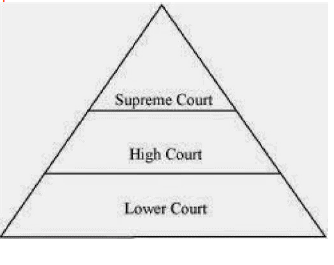
Q3. In the Following illustration, fill in each tier with the judgments given by the various courts in the Sudha Goel case. Check your responses with others in class.


Answer:
Lower Court (Trial Court): 
Laxman, his mother Shakuntala and his brother-in-law Subhash Chandra were sentenced to death
High Court: Laxman, Shakuntala and Subhash Chandra were acquitted.
Supreme Court: Laxman, Shakuntala were given life imprisonment while Subhash Chandra was acquitted for lack of sufficient evidence.

Q4. Keeping the Sudha Goel case in mind, tick the sentences that are true and correct the ones that are false.
(a) The accused took the case to the High Court because they were unhappy with the decision of the Trial Court.
(b) They went to the High Court after the supreme Court had given its decision.
(c) If they do not like the Supreme Court verdict, the accused can go back again to the Trial Court.
Answer:

(a) True
(b) They went to the High Court after the Trial Court had given its decision.
(c) If they do not like the Supreme Court verdict, the accused cannot go back again to the Trial Court since the Supreme Court is at the highest rung of the judiciary pyramid.

Q5. Why do you think the introduction of Public interest Litigation (PIL) in the 1980s is a significant step in ensuring access to justice for all?
Answer:

The introduction of Public Interest Litigation (PIL) in the 1980s is a significant step in ensuring access to justice for all because it also keeps in mind the interests of the illiterate and poor who are not educated enough or cannot afford to access the Indian legal system for justice against exploitation or violation of their basic human and Fundamental Rights.

Q6. Re-read excerpts from the judgment on the Olga Tellis vs Bombay Municipal Corporation case. Now write in your own words what the judges meant when they said that the Right to Livelihood was part of the Right to Life.
Answer:

In Olga Tellis vs. Bombay Municipal Corporation case, the judges said that the Right to Livelihood was part of the Right to Life. They stated that life does not merely imply an animal existence; it cannot be lived without a means of living, that is, "the means of livelihood". The judges conferred that eviction from a pavement or slum is deprivation of means of livelihood for the poor who cannot afford to live anywhere else. They take up small jobs in surrounding areas and to lose their pavement or slum would lead to loss of a job resulting in loss of a means of livelihood. Consequently, leading to "deprivation of life". This is how the judges connected Right to Livelihood to the Right to Life.

Understanding Laws

Q.1. Write in your own words what you understand by the term the 'rule of law'. In your response include a fictitious or real example of a violation of the rule of law.
Ans.

  • Law is a system of rules, usually imposed through a Government or Institution and is applied to govern a group of people. It shapes politics, economics and society in numerous ways.
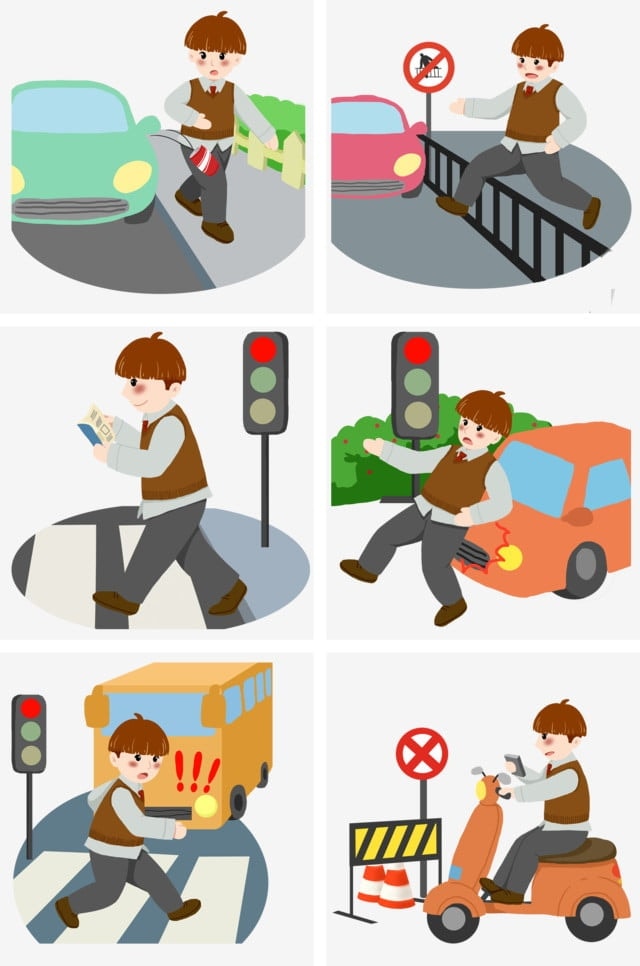
  • The most common example of a violation of the rule of law can be seen on the roads. Motorists and pedestrians do not follow the traffic rules. Motorists do not adhere to speed limits, nor do they stop behind the line at traffic signals.Violation of Traffic Rules
  • Pedestrians rarely use the zebra crossing and cross the road at will, causing harm not only to themselves but also to other road users.

Q.2. State two reasons why historians refute the claim that the British introduced the rule of law in India.
Ans.
The two reasons why historians refute the claim that the British introduced the Rule of Law in India are:
(i) Colonial law was arbitrary.
Example: Sedition Act of 1870.
(ii) Indian nationalists played a prominent role in the development of the legal sphere in British India.

Q.3. Re-read the storyboard on how a new law on domestic violence got passed. Describe in your own words the different ways in which women's groups worked to make this happen.
Ans.

  • Women's groups worked hard and untiringly towards passing the new law on domestic violence in India. 
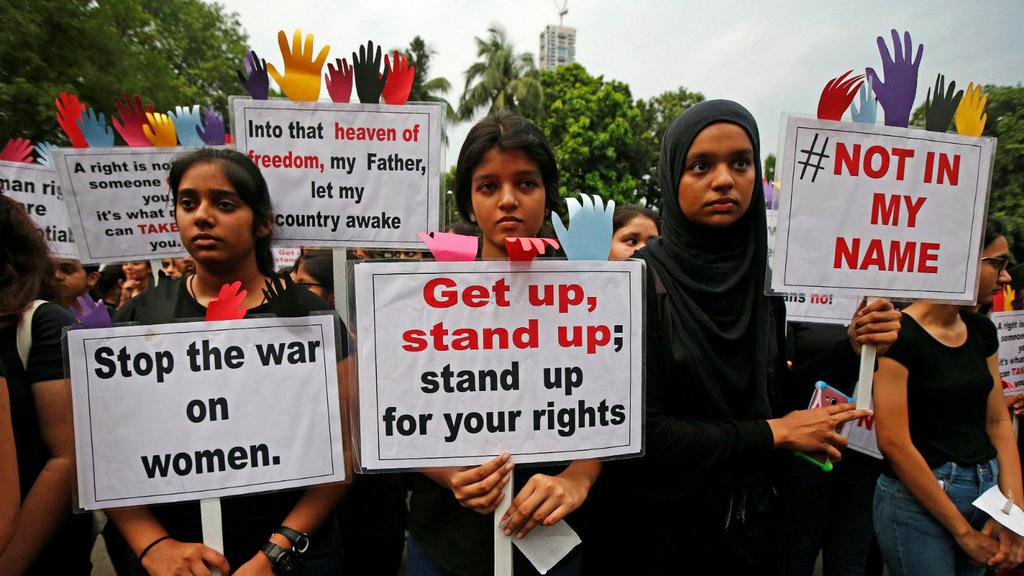
  • They used different forums like public protests, hearings, meetings with other organizations, press conferences and petitions to the government to introduce a new reformed bill on domestic violence to include demands like monetary relief and protection against being evicted from the shared household. Women Protesting Against Domestic Violence
  • While earlier, domestic violence only entailed "injury or harm or threat of injury or harm" by an adult male against a woman. The Protection of Women from Domestic Violence Act 2005 extended to include physical, economic, sexual, verbal and emotional abuse.

Q.4. Write in your own words what you understand by the following sentence on: They also began fighting for greater equality and wanted to change the idea of law from a set of rules that they were forced to obey, to law as including ideas of justice.
Ans.

  • This line refers to the protests of Indian nationalists against the violation of the rule of law by British authorities. Indians were discriminated against in their own country by the British colonists and the Sedition Act of 1870 was the most prolific example of the breach of the rule of law. 
  • This Act was remonstrated against by Indian freedom fighters in favour of a more just set of rules based on ideals of equality.
  • Many Indians began to practice the legal profession and used it to demand and gain equal rights for all. Thus, Indians played a major role in the evolution of the rule of law during times of colonial rule.

Why do We need Parliament

Q. Why do you think the nationalist movement supported the idea that all adults have a right to vote?
Ans.
  • People from various backgrounds joined the struggle for freedom. They were inspired by the ideas of freedom, equality and participation in decision making.
  • Under colonial rule, the people had to live in fear of the British Government. The British forced people to follow their orders and decisions which were at times very harsh. People were severely punished even if they tried to criticize these decisions. 
  • Because of the continuous demand of the Indian National Congress, the Government of India Act 1909 was passed, which allowed for some elected representation. Still, the British Government did not allow all adults to vote. 
  • The bitter experience of colonial rule and struggle for freedom movement left little doubt in the minds of the nationalists that all persons in independent India would be able to participate in decision making.
  • These are the reasons because of which, I think, the nationalist movement supported the idea that all adults (above 18 years of age) have a right to vote.

Q. From the list below, identify the work of a State Government and that of a Central Government.
(a) The decision of the Indian Government to maintain peaceful relations with China.
(b) The decision of the MP Government to discontinue Board Exams in Class VIII for all schools under this Board.
(c) Introduction of a new train connection between Ajmer and Mysore.(d) Introduction of a new thousand rupee note.
Ans.
(a) Central Govt.
(b) State Govt.
(c) Central Govt.
(d) Central Govt.

Q. You have read that most elected members whether the Panchayat or the Vidhan Sabha or the Parliament, are elected for a fixed period of 5 years. Why do we have a system where the representatives are elected for a fixed period, not for life.
Ans. 
  • Members are elected for a fixed period so that people can use their preferences again after 5 years to elect their member. This is required for efficient working in a democratic system. 
  • Moreover, in democracy, people have the right to express their choices and elect their leaders which will not be possible unless they are elected for a fixed period. 

Q. If you were a Member of Parliament (MP), list two questions that you would like to ask.
Ans. 
(i) How much amount being paid by the government on school nutritional policy like, mid-day meal programme and what percentage of total number of schools are being benefitted out of it?
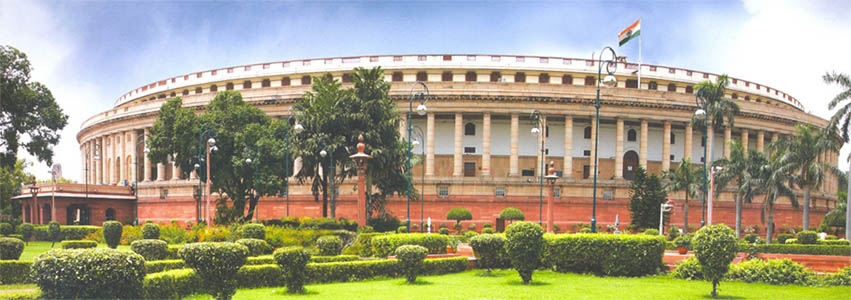
(ii) What changes are being made by the government in the current policies for the improvement of female education?Parliament Building of India, New Delhi


Q. Why do you think there are so few women in Parliament? Give two reasons.
Ans. 
  • Absence of any system for proper representation of women in the parliament such as reservation of seats for women.
  • Discrimination against women in a male-dominated society.

Understanding Secularism

Q.1. List the different types of religious practice that you find in your neighbourhood. This could be different forms of prayer, worship of different gods, sacred sites, different kinds of religious music and singing, etc. Does this indicate freedom of religious practice? 
Ans. 
Different types of religious practices are:

  • Jagran
  • Kirtan
  • Namaz

Person offering Namaz

  • Mass
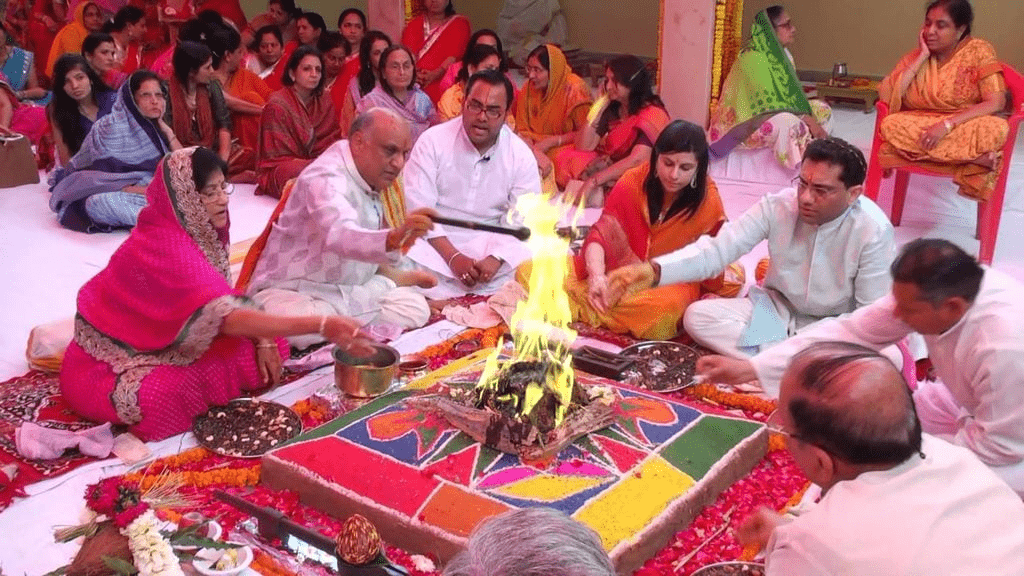
  • HavanHavan

Yes, this indicates freedom of religious practice. 

Q.2. Will the government intervene if some religious group says that their religion allows them to practise infanticide? Give reasons for your answer.
Ans.

  • The government in any democratic nation would intervene if some religious group says that their religion allows them to practice infanticide because this tradition goes against the Fundamental Right to Life.
  • It involves the killing of an innocent and is, hence, unacceptable. The government, in this case, interferes by coercion. However, sometimes, the government may also intervene via support.
    Example: Sikhs in Delhi are excused from wearing helmets on two-wheelers because their religion demands them to wear a turban-a sacred tradition for them.

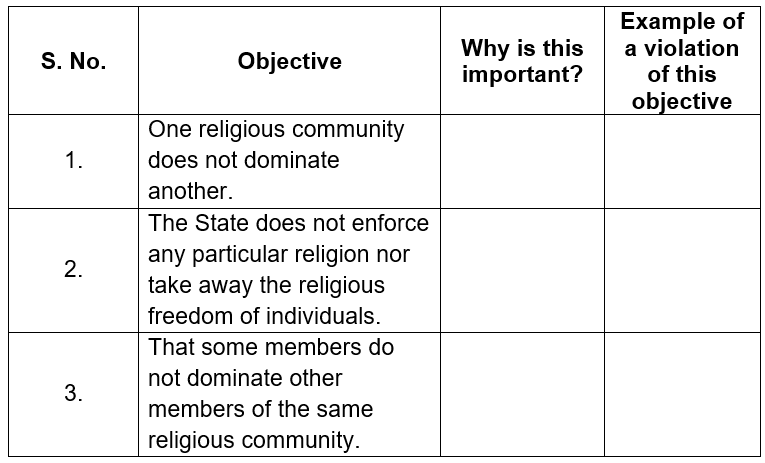
Q.3. Complete the following table:

Ans.
1. Importance: This is important to protect the Fundamental Right to Freedom of Religion.
Example of violation: The demolition of the Babri Masjid in Ayodhya on 6th December 1992 by Hindu nationalists.
2. Importance: This is important to uphold the ideals of a democratic nation which allows its citizens freedom to choose whichever religion they wish to follow.
Example of violation: France, in February 2004, banned headscarves and turbans in public places, thereby hurting the sentiments of Muslim and Sikh minorities.
3. Importance: This is necessary to uphold individual freedom in the light of pressure from a group or religious community that one belongs to.
Example of violation: The Christian community is divided into Protestants and Catholics; Irish Catholics are looked down upon and troubled by the officials of the Church of England who are pre-dominantly Protestants.

Q.4. Look up the annual calendar of holidays of your school. How many of them pertain to different religions? What does this indicate?
Ans. 
Many holidays on a school's annual calendar pertain to different religions. This indicates that India is a secular country where religious freedom is granted to its citizens and all religions are equally respected.

Q.5. Find out some examples of different views within the same religion.
Ans. 
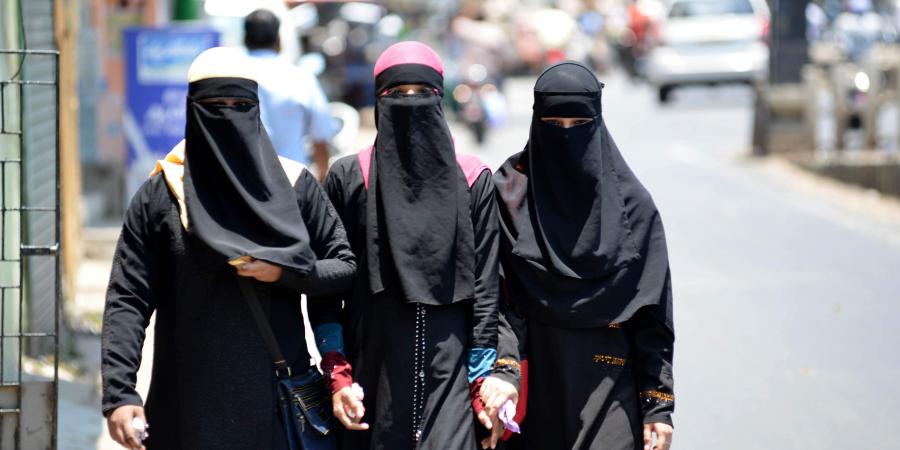
Among Muslims, many people believe in ‘Parda system’, whereas many do not approve of it & see it as interference in the freedom of women.Women in BurkaQ.6. The Indian State both keeps away from religion as well as intervenes in religion. This idea can be quite confusing. Discuss this once again in class using examples from the chapter as well as those that you might have come up with.
Ans.

  • The Indian State distances itself from the religion and it is not rules by a religious group & nor does it support any one religion.
  • Equal respect is given to all religions. In order to prevent domination by one particular community, the state may interfere in the religion.
  • State may interfere in the religion to ensure that all the religions are treated equally.
  • Sometimes, the State may have to intervene in the religion based on ‘personal laws’ of the communities to ensure that laws relating to equal inheritance are protected.

Q.7. This poster alongside highlights the need for 'Peace'. It says, “Peace is a never ending process... It cannot ignore our differences or overlook our common interests.” Write in your own words what you think the above sentences are trying to convey? How does it relate to the need for religious tolerance?
This chapter had three drawings on religious tolerance made by students of your age. Design your own poster on religious tolerance for your peers.
Ans.

  • ‘Peace is a never-ending process. It cannot ignore our differences or overlook our common interests.’ The above sentences say that for all the communities to stay together, it is very important that each religious community should respect the other, their interests & their religious practices.
  •  We should not feel bound by any law that we need to respect the other religion, whereas, we should work towards decreasing the differences among religious communities & work towards bringing peace in the society as a civilized society. Only then, we will be able to enjoy the co-existence of different religions in society.

The Indian Constitution

Q1. Why does a democratic country need a Constitution?
Ans: 
A democratic country need a Constitution because:

  • It lays out the important guidelines that govern decision making within the various societies of the country.
  • It lays down the ideals that form the basis of the kind of country that its citizens aspire to live in.
  • It serves as asset of rules and principles as the basis by which the country has to be governed.
  • It provides rules to safeguard the interests of minorities and prevent any kind of domination by the majority on minorities.
  • It lays down rules that guard against the misuse of power by any politician leader.
  • It also provides rights to its citizens and protects their freedom.


Q2. Look at the wordings of the two documents given below. The first column is from the 1990 Nepal Constitution. The second column is from the more recent interim Constitution of Nepal.

1990 Constitution of Nepal

Part 7: Executive

2015 Constitution of Nepal 

Part 7: Federal Executive

Article 35: Executive Power: The executive power of the Kingdom of Nepal shall be vested in His Majesty and the Council of Ministers.

Article 75: Executive Power: The Executive Power of Nepal shall, pursuant to this Constitution and law, be vested in the Council of Ministers.

What is the difference in who exercises ‘Executive Power’ in the above two Constitutions of Nepal?

Ans: In Article 35 of the 1990 Constitution of Nepal, the powers to rule the country, to set rules and to manage the country are all vested in the King of the country and the Ministers appointed under him.

However, Article 75 of the 2015 Constitution of Nepal states that the rules, governance and management of the country will be based on the laws mentioned in the Constitution of the country under the supervision of the Ministers.


Q3. What would happen if there were no restrictions on the power of elected representatives?
Ans: 
If there are no restrictions on the power of the elected representatives the leaders might misuse the powers given to them. The Constitution provides safeguards against this misuse of power by our political leaders.


Q4. In each of the following situations, identify the minority. Write one reason why you think it is important to respect the views of the minority in each of these situations.
(a) In a school with 30 teachers, 20 of them are male.
(b) In a city, 5 percent of the population are Buddhists.
(c) In a factory mess for all employees, 80 percent are vegetarians. 

(d) In a class of 50 students, 40 belong to more well-off families.
Ans: 
(a) Female teachers are in minority. The female teachers must be allowed space to voice their opinion so that their efforts at teaching are not hindered by their minority status.
(b) Buddhists are in minority. Every individual has the right to follow the religion of his/her choice. People of other faiths must respect the religion other than their own.
(c) Non-vegetarians are in minority. Food choice is personal wish so he/she should have the freedom to eat what he/she wants.
(d) Under privileged are in minority. Citizens can not be discriminated by their birth so their views have to be respected.


Q5. The column on the left lists some of the key features of the Indian Constitution. In the other column write two sentences, in your own words, on why you think this feature is important:

Key Feature

Significance

Federalism

Separation of Powers

Fundamental Rights

Parliamentary Form of Government


Ans: Key features
1. Federalism: It ensures national unity and at the same time allows individual progress. A federal government allows the Centre to hold supreme power but its Constituent States have some power as well.
2. Separation of Powers: This serves two purposes: firstly, tyrannical use of power is avoided since it does not vest power in any single authority. Secondly, the 3 organs of power also work as a check on each other, thereby maintaining a good balance.

3. Fundamental Rights: These are important because they conform to a humane society. They also protect citizens against arbitrary and absolute use of power by the State.
4. Parliamentary Form of Government: It upholds universal adult franchise. This entails the fact that the people of a country play a direct role in electing their representatives to run the state as well as the nation.


How the State Government Works

Q1. Use the terms 'constituency' and 'represent' to explain who an MLA is and how is the person elected?

Answer

MLA is the members of the legislative assembly who represent people and also form the government.

(i) Each state has a legislative assembly.

(ii) Each state is divided into different areas or constituencies.

(iii) From each constituency, the people elect one representative who then becomes a Member of the Legislative Assembly (MLA).

(iv) MLA is elected by the people who contest in election by voting.

Q2. How did some MLAs become Ministers? Explain.

Answer

(i) After the elections, a political party whose MLAs have won more than half the number of constituencies in a state became the ruling party.

(ii) The MLAs belonging to the ruling party will elect their leader who will become the chief minister.

(iii) The chief minister then selects other people as ministers.

(iv) The Governor of the state then appoints the chief minister and other ministers.

Q3. Why should decisions taken by the Chief Minister and other ministers be debated in the Legislative Assembly?

Answer

 (i) In a democratic government, participant is important from each and every section.

(ii) Thus, whatever decisions are being taken have to be approved by the members of the legislative assembly.

(iii) These members then ask questions, debate an important issue, decide where money should be spent, etc.

(iv) After that, they have the main authority to finalize the decision.

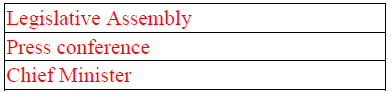
Q4. What was the problem in Patalpuram? What discussion/action was taken by the following? Fill in the table.


Answer:

Main problem in Patalpuram:

(i) Lack of proper sanitation and hygiene.

(ii) Scarcity of clean drinking water.

(iii) Not proper medical facilities.

(iv) Spread of diarrohea.

Discussion/action was taken by the following:

Public meeting: Demand for the improvement of the healthcare and sanitation facilities from the officials.

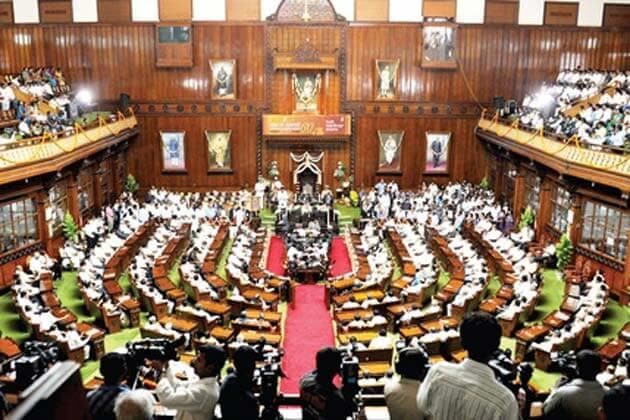
Legislative Assembly: intend to supply drinking water to every village through tanker trucks and also explained the steps the government had taken. Collection of garbage.

Fig: Legislative Assembly

Press conference: Organised by the health minister. Newspapers and the media widely discuss the issue and the government has to respond by holding press conference.

Chief Minister: Visited Patalpuram district. They went to visit the families who had lost their relatives and also visited people in the hospitals. Promised funds for the works and also planned to start a campaign to inform people.

Q5. What is the difference between the work that MLAs do in the Assembly and the work done by government departments? 

Answer 

(i) Act of making laws on certain issues is done by MLAs in the Legislative Assembly of each state while the implementation of these laws is done by various government departments.

(ii) Whatever work is done by these government departments has to be approved by the members of the legislative assembly or MLAs.

Role of the Government in Health

Ques 1: In this chapter, you have read that health is a wider concept than illness. Look at this quote from the Constitution and explain the terms ‘living standard’ and 'public health' in your own words. An important part of the Constitution says it is the “duty of the State to raise the level of nutrition and the standard of living and to improve public health.”

Ans: Living Standard -: 

(i) It means the condition in which people are living.

(ii) The facilities provided by the government in order to raise the standard of living of people are measured in terms of comforts, wealth, goods or services.

(iii) Higher the standard of living of people higher the economy and vice versa. Thus it also reflects the economic condition for a country.

Public Health -: 

(i) It means the general level of public health.

(ii) The Government provides free basic health facilities and low-cost hospitals and medicines to their people.

(iii) It ensures that every person has the right to get health facilities.

Ques 2: What are the different ways through which the government can take steps to provide healthcare for all? Discuss. 

Ans: Fig. policy started by governmentDifferent ways through which the government can take steps to provide healthcare for all:

(i) Establishing public healthcare at the zonal level.

(ii) Setting up low-cost government hospitals.

(iii) Health insurance for basic treatment.

(iv) Provision of clean drinking water and steps to check pollution.

(v) Generic medicines at low prices should be provided.

(vi) Healthcare program and creating awareness.

(vii) The mobile clinic should be encouraged more in rural areas.

Ques 3: What differences do you find between private and public health services in your area? Use the following table to compare and contrast these.

Facility   

Cost of Services

Availability of service

Private


Public


Ans:

Facility    

         Cost of       Services

   Availability of service

Private

      High

     Good and easily         available service

Public

       Low

Poor and take a long time in providing services.


Ques 4: ‘Improvement in water and sanitation can control many diseases.’ Explain with the help of examples.

Ans: It is true that 'improvement in water and sanitation can control many diseases.’

(i) Contaminated water is the main reason for many diseases like cholera, jaundice, etc.

(ii) By the provision of clean drinking water, protection from water-related diseases can be assured.

(iii) Poor sanitation is responsible for many communicable diseases.

(iv) Lack of proper sanitation also gives rise to the birth of mosquitoes, several insects which affect the health of people.

(v) Proper sanitation will lead to a hygienic condition which will surely control many diseases.

On Equality

Q1. In a democracy, why is Universal Adult Franchise important?
Ans: Universal adult franchise is important in a democracy because it is based on the idea of equality. The citizens are assured that everyone has one vote irrespective of their gender or socio-economic status.


Q2. Re-read the box on Article 15 and state two ways in which this Article addresses inequality?
Ans: Article 15 addresses inequality on two fronts. It prohibits the state from practicing it and tells the society to not do it.

Q3. In what ways was Omprakash Valmiki’s experience similar to that of the Ansari's?
Ans: Omprakash Valmiki was discriminated against on the account of his caste, while the Ansaris were discriminated against on account of their religion. The core similarity is that they both were discriminated against because of their birth, which is prohibited under Article 15. Omprakash Valmiki was not allowed to sit with his fellow classmates on account of his birth as a Dalit and was made to sweep the school and its environs, thus hurting his dignity. The Ansari’s were denied a flat to rent, as their religion differed to those of others, who were in majority among the occupants of the apartment complex.

Q4. What do you understand by the term “all persons are equal before the law”? Why do you think it is important in a democracy?
Ans: The term “all persons are equal before the law” states that all citizens, irrespective of their social or economic background, have to obey the same laws. No person shall be discriminated against in the eyes of the law on the grounds of race, religion, caste or gender.
The very essence of democracy is the idea of equality, as it gives equal and if not important recognition to all. It would never have existed in the first place if there were inequalities on the basis of race, religion and gender etc.

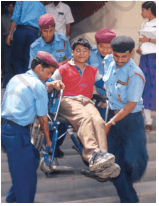
Q5. "The Government of India passed the Disabilities Act in 1995. This law states that persons with disabilities have equal rights, and that the government should make possible their full participation in society. The government has to provide free education and integrate children with disabilities into mainstream schools. This law also states that all public places including buildings, schools, etc., should be accessible and provided with ramps".
Look at the photograph and think about the boy who is being carried down the stairs. Do you think the above law is being implemented in this case? What needs to be done to make the building more accessible for him? How would his being carried down the stairs affect his dignity as well as his safety?

Ans: The law is not being implemented in his case. To make the building more accessible to him wheelchair ramps should be constructed. Being carried down the stairs is unsafe because he might slip and fall from his wheelchair. At the same time, it injures his dignity because he has to rely on others thereby making him conscious of his disability.


7. Urban Administration

 Ques 1. Why did the children go to Yasmin Khala’s house?

Ans: Children went to Yasmin Khala’s house to know about the person who is responsible for the maintenance of the street lights and to whom they should pay. Rehana’s mom told them that the Municipal corporation takes care of the replacing lights. So, they went to Yasmin Khala’s house as she recently retired from the Municipal Corporation and could tell them about it.

Ques 2. List four ways in which the work of the Municipal Corporation affects the life of a city-dweller.
Ans: Four ways in which the work of the Municipal Corporation affects the life of a city-dweller:
(i) Construction and maintenance of roads, parks, street lights, etc.
(ii) Cleansing and maintenance of drainage system.
(iii) Collection and disposal of garbage.
(iv) Supply of safe drinking water.
(v) Electricity supply.

Ques 3. Who is a Municipal Councillor?
Ans:
A Municipal Councillor is an elected member of the committee of Municipal Corporation.
• The ward or Municipal Councillor listened to the problem of their local people and help them to get in touch with the concerned authority.
• They also make the budget for their ward and put it in front of the whole council.

Ques 4. What did Gangabai do and why?
Ans: Gangabai went to the Ward Councillor house after gathering a small group of women shouting slogans and described the situation in the locality to him.
She did so because there was uncollected garbage lying all over in the locality which attracts dogs, rats, and flies and people are getting ill from this.

Ques 5. How does the Municipal Corporation earn the money to do its work?
Ans: Municipal Corporation earns money from the taxes collected from various sources like property taxes, water taxes, entertainment taxes, and also from taxes on education and other amenities.

Ques 6. Discuss
In the two photographs, you see different ways of collecting and disposing of garbage.
i) Which way do you think provides safety to the person disposing of garbage?
ii) What are the dangers of collecting garbage in the manner shown in the first photograph?

iii) Why do you think that proper ways of disposing of garbage are not available to those who work in municipalities?
Ans:
(i) I think Photo 2 provides safety to the person disposing of garbage.
(ii) In the first photograph, people collecting garbage might get injured or infected and may fall ill. It will affect their health as they are not taking any safety measures. The garbage will also not be collected properly.
(iii) The proper ways of disposing of garbage that is not available to those who work in municipalities may be due to the lack of fund availability or the careless behavior of the officials and workers.

Ques 7. Several poor people in the city work as domestic servants as well as work for the Corporation, keeping the city clean. Yet the slums in which they live are quite filthy. This is because these slums seldom have any water and sanitation facilities. The reason often given by the Municipal Corporation is that the land in which the poor have set up their homes does not belong to them and that slum-dwellers do not pay taxes. However, people living in middle-class neighborhoods pay very little in taxes compared to the amount of money the corporation spends on them in setting up parks, street lighting facilities, regular garbage collection, etc. Also as you read in this chapter, the property taxes collected by the Municipality makes up only 25-30 percent of its money. Why do you think it is important that the Corporation should spend more money on slum localities? Why is it important that the Municipal Corporation provide the poor in the city with the same facilities that the rich get?
Ans:
It is important that the Corporation should spend more money on slum localities because:
(i) If they do not provide them equal facilities then it is discrimination on the basis of economic condition.
(ii) Slums are also a part of society. The people living there contribute a lot to the society and also the major work population like domestic servants Municipal workers, cleaners, etc.
(iii) Diseases can also spread to the neighboring locality of the slums due to dirty conditions.

6. Rural Administration

 Q1. What is the work of the police?

Answer

Work of the police:
(i) Maintenance of law and order.
(ii) Investigation of a case or taking FIR.
(iii) Protection of the public and their property.
(iv) Maintenance of public safety.
(v) Testifying truthfully in the court.

Q2. List two things that the work of a Patwari includes.

Answer

Two things that the work of a Patwari includes:
(i) Main work is measuring land and keeping land records.
(ii) Collection of land revenue from farmers.
(iii) Providing information to the government about the growth of the crops.

Q3. What is the work of a tehsildar?

Answer

Work of the tehsildar:
(i) Hearing disputes related to lands.
(ii) Supervising the work of the Patwaris.
(iii) Ensuring that land records are properly kept.
(iv) Ensuring the proper collection of land revenue.
(v) Making sure that the farmers can easily obtain a copy of their record.
(vi) Caste certificates for the students.

Q4. What issue is the poem trying to raise? Do you think this is an important issue? Why?

Answer

The poem is trying to ruse the issue of gender discrimination based on the inheritance of land by their father.
Yes, this is an important issue because:
(i) Daughters are denied of the share.
(ii) Son does not look after their mother and sisters after getting a share of the property.
(iii) Raising this issue will ensure the security of women.

Q5. In what ways are the work of the Panchayat, that you read about in the previous chapter, and the work of the Patwari related to each other?

Answer

(i) Panchayat often settles the small disputes of lands between locals and Patwari maintains the land records and land settle disputes.
(ii) Panchayat levied local taxes and revenue while Patwari organises the collected revenues.
(iii) Both Patwari and Panchayat need to cooperate with each other on the construction work over land area.

Q6. Visit a police station and find out the work that the police have to do to prevent crime and maintain law and order in their area especially during festivals, public meetings, etc.

Answer

Work is done by the police to prevent crime and maintain law and order in their area especially during festivals, public meetings:
(i) They enquire about the amount of crowd to be gathered in their local areas.
(ii) According to the crowd, they prepare for the proper management and policemen set up on the duty.
(iii) They also spread awareness among the public to be careful and maintain peace.
(iv) They prepare for any emergency and are ready to handle it.
(v) All local police station is always in contact with their head branch and cooperate with each other.

Q7. Who is in charge of all the police stations in a district? Find out.

Answer

The Superintendent of police (SP) is in charge of all the police stations in a district while the local police station is headed by Station House Officer (SHO).

Q8. How do women benefit under the new law?

Answer

Benefits to women under the new law:
(i) Earlier they were not entitled to their ancestor’s property but now they are.
(ii) It makes women more independent and economically secure.
(iii) This also empowers the women and they can leave peacefully within the society.
(iv) They can also start their own work after acquiring their shares in the property.
(v) They will be not excused over beneficial and economical decisions.

Q9. In your neighbourhood are there women who own property? How did they acquire it?

Answer

Yes, in my neighborhood many women have their own property. Some acquire it from their ancestors or forefathers while some bought their property from their own income source.

5.Panchayati Raj

 Q1. What problem did the villagers in Hardas village face? What did they do to solve this problem?

Answer: Problem faced by the villagers in Hardas village:
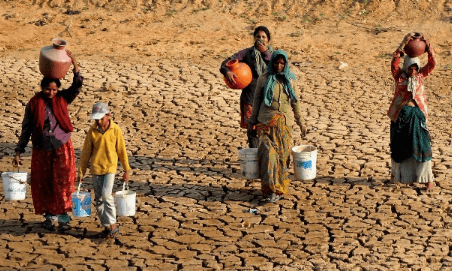
NCERT Solutions: Panchayati Raj

(i) Acute water shortage.
(ii) Hand pump water has gone well below the point up to which the ground has been drilled.
(iii) Women have to go to the Suru river which is 3 k.m. away to get water.
The solution has done by them to solve this problem:
(i) Piping water from the river Suru and making an overhead tank in the village.
(ii) Deepen the handpumps and clean the wells for this season.
(iii) Finally, they came with the permanent solution of conserving water or the watershed development.


Q2. What, in your opinion, is the importance of the Gram Sabha? Do you think all members should attend Gram Sabha meetings? Why?

Answer: Importance of Gram Sabha:
(i) Gram Sabha elects the members of the Gram Panchayat.
(ii) It can question Gram Panchayat and keep watch on their work.
(iii) Local problems of the villagers can be discussed in the meeting.
(iv) They can recommend solutions to the problems.
Yes, I think all members should attend Gram Sabha meetings because they can raise the problems faced by them daily. They can also advise and make aware of the work done by the Gram Panchayat. It is the forum where they can discuss the welfare programs of the village.


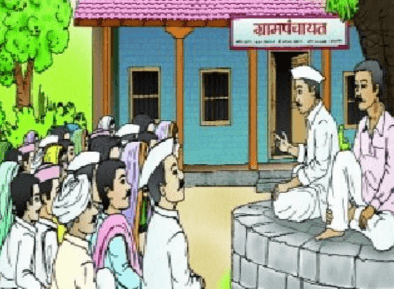
Q3. What is the link between a Gram Sabha and a Gram Panchayat?

Answer: Link between a Gram Sabha and a Gram Panchayat:
(i) Gram Sabha elects the members of the Gram Panchayat.
(ii) The Panch and the Gram Panchayat are answerable to the members of Gram Sabha.
(iii) Gram Sabha keeps an eye on the elected representatives of the Gram Panchayat.
NCERT Solutions: Panchayati Raj


Q4. Take an example of any one task done by a Panchayat in your area/nearby rural area and find out the following:
 a. Why it was taken up.
 b. Where the money came from.
 c. Whether or not the work has been completed. 

Answer: (a) Panchayat needs to construct a building of the middle school.
(b) Major part of the money came from the State Government and a minor part of the money came from the funds of Panchayat.
(c) The work has been completed on time.


Q5. What is the difference between a Gram Sabha and a Gram Panchayat?

Answer: Gram Sabha

Members of Gram Sabha are not elected.

All the adults who are above the age of 18 or have the right to vote are members of Gram Sabha.

The members and the body are permanent.

They keep an eye on the works of Gram Panchayat.

Gram Panchayat

Members of Gram Panchayat are elected representatives by the Gram Sabha.

Ward members, Panchs, and Panchayat president are the members of Gram Panchayat.

The members and the body are elected after every 5 years.

They hear from Gram Sabha and do the work.


6. Read the following news item.
Nimone is a village on the Chauphula-Shirur Road. Like many others, this village has also been facing a severe water shortage for the last few months and villagers depend on tankers for all their needs. Bhagvan Mahadeo Lad (35) of this village was beaten with sticks, iron rods, and axes by a group of seven men. The incident came to light when some villagers brought a badly injured Lad to hospital for treatment. In the FIR recorded by the police Lad said that he was attacked when he insisted that the water in the tanker must be emptied into the storage tanks constructed as part of the water supply scheme by Nimone Gram Panchayat so that there would be equal distribution of water. However, he alleged that the upper caste men were against this and told him that the tanker water was not meant for the lower castes. Adapted from Indian Express, May 1, 2004
 a. Why was Bhagvan beaten?
 b. Do you think that the above is a case of discrimination? Why?

Answer: (a) Bhagvan was beaten when he insisted that the water in the tanker must be emptied into the storage tanks constructed as part of the water supply scheme by Nimone Gram Panchayat so that there would be equal distribution of water.

(b) Yes, the above is a case of discrimination because the distribution of water was not equal for all the people. The distribution of water from tankers was only served to the upper caste people, not to the lower caste people. Moreover, it was not even emptied in-tank constructed by the Panchayat.


Q7. Find out more about watershed development and how it benefits an area?

Answer: Watershed development is the conservation, recharging, and judicious use of the water resources like underground water, rivers, etc., and lands within the watershed area.
Benefits of watershed development in an area:
(i) It makes the land fertile and supports the growth of trees, plants, and cultivation.
(ii) Help in the preservation of water and its resources.
(iii) Prevents soil erosion.